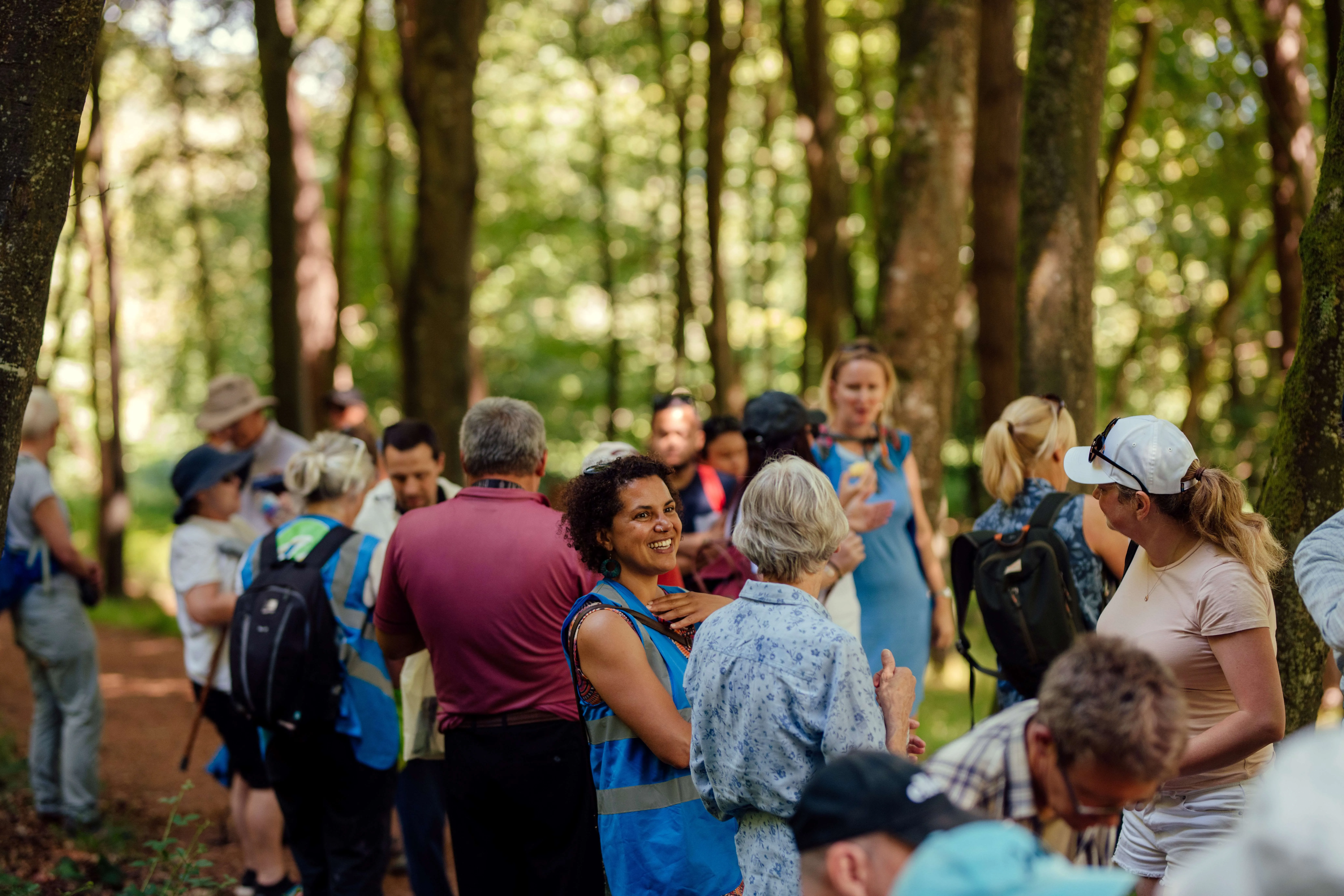
Did you know that North African soldiers served on Hadrian's Wall nearly 2,000 years ago? Yet many visitors walk the National Trail without ever hearing their story.
In this guest blog, Mohammed Dhalech - a long standing advocate for inclusion in the outdoors and a researcher specialising in race, rurality and heritage, reflects on his experiences walking Hadrian's Wall Wall Path National Trail. Through conversations on the Trail and insights from his research, he explores how the stories we tell about our landscapes can shape who feels welcome in them today and why that matters for the future of our National Trails.
For Mohammed, walking the Wall has become a way of exploring not just the landscape, but the histories and assumptions that shape how it is understood.
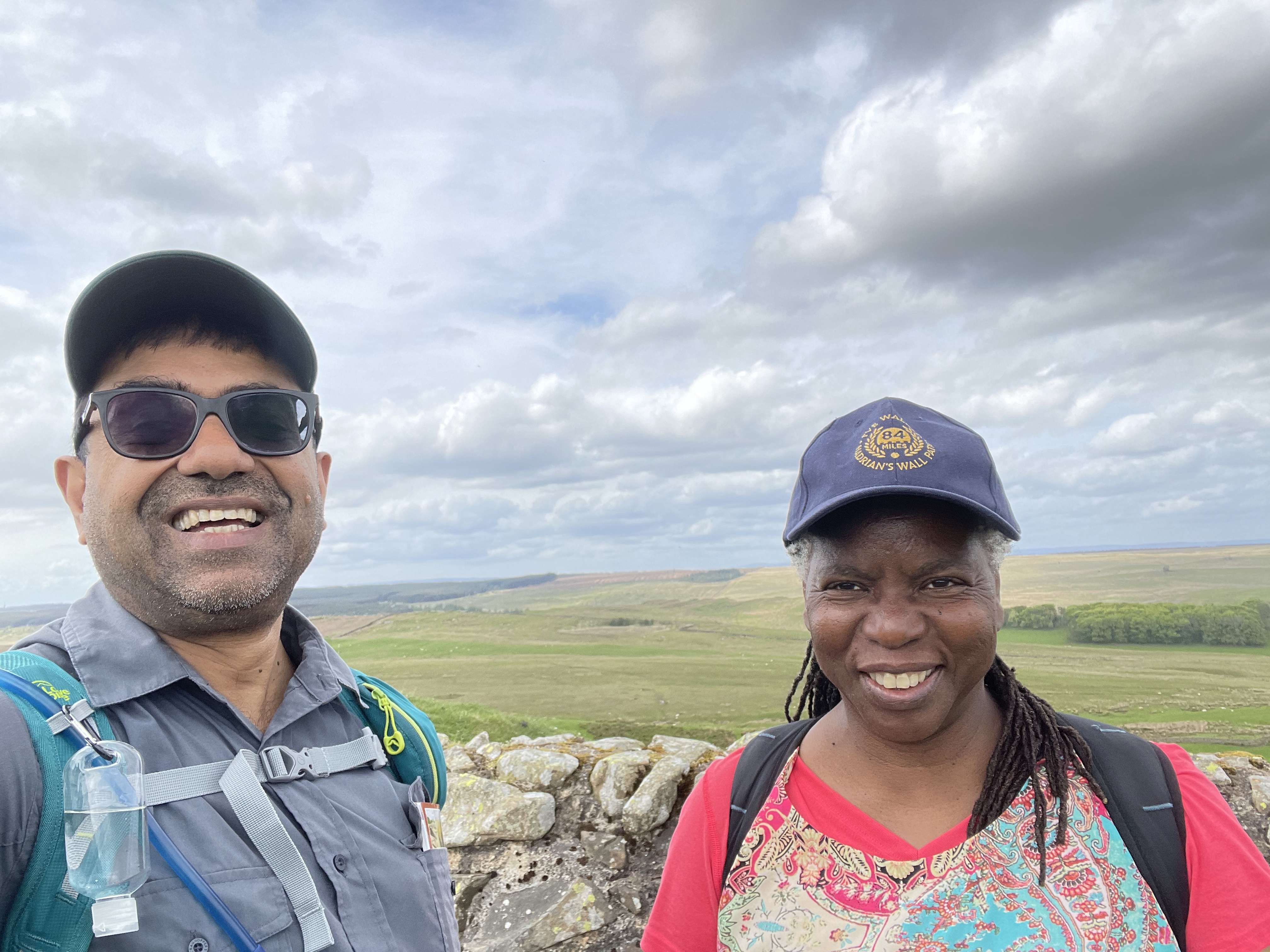
Standing on the escarpment above Steel Rigg, looking across one of the most photographed sections of Hadrian's Wall, it is easy to feel connected to the past. The landscape stretches for miles, and the Wall snakes across the hills. Visitors stop to take photographs, share stories and enjoy the view.
Yet one question that has stayed with me throughout my walks along the Wall is surprisingly simple: whose past are we connecting with, and who feels part of that story today?
I first walked Hadrian's Wall Path National Trail in 2022, during the Wall's 1900th-anniversary year. Like many people, I arrived expecting a story about Romans, frontiers and military history. What I did not expect was how often questions of race, belonging and historical memory would arise as I walked.
Over the following years, I returned to the Wall again and again: sometimes alone, sometimes with community groups, and sometimes as part of formal fieldwork. Each visit brought new conversations, observations and questions.
What began as a walk through history became something else entirely: a journey into how people experience belonging in the countryside and how National Trails can help shape that sense of belonging.
More than a walk through history
One of the things I have learned from my research is that people often speak differently when they are walking. Side-by-side conversations on a trail feel less formal than sitting across a table. People reflect more openly, notice more of their surroundings, and share stories that arise naturally from the landscape.
Along Hadrian's Wall, conversations often return to recurring themes: who feels welcome here, whose stories are visible, who sees themselves reflected in the landscape, and which histories are told and which are missing.
One conversation that has stayed with me took place during a quiet stretch of walking, when the discussion shifted from the landscape itself to the feeling of being watched within it. Nothing obvious had happened. Yet the person I was walking with described that familiar sense of being slightly more visible than everyone else.
That kind of experience is difficult to capture in visitor surveys or access audits. Yet it shapes how people feel in rural spaces and reminds us that welcome is not only about whether a path is open, but also about whether someone can move along it with confidence, comfort and a sense of belonging.
The overlooked African history of Hadrian's Wall

One of the things that fascinates me about Hadrian's Wall is that many of the stories we need are already there; they are simply not always foregrounded.
The Wall is also associated with Septimius Severus, the African-born Roman Emperor from present-day Libya, who led campaigns in northern Britain and died in York in AD 211. His story further underlines the international and multicultural connections embedded in this landscape.

One of the moments that stayed with me came at Burgh-by-Sands, the site of the Roman fort of Aballava. Evidence suggests the presence of North African soldiers serving on the Wall nearly two thousand years ago. Yet many visitors pass through without ever hearing those stories.
For me, that raises an important question: if racially diverse people have been part of this landscape for centuries, why do so many still assume that diversity is a recent arrival in the countryside?
Reading a recent online recollection of a guided tour, the guide spoke passionately about Roman history yet seemed unaware of the Wall’s African connections. This is not a criticism of the guide. Rather, it highlights how some stories become embedded in public understanding, while others remain hidden in plain sight.
Why the stories we tell matter

Historical memory is not simply about what happened in the past. It is also about what we choose to remember in the present. Every information board, guided walk, museum display and conversation helps shape public understanding of a place. When certain stories are repeatedly told while others remain largely invisible, this shapes how people understand both the landscape and their relationship to it.
Questions about whose stories are told are not confined to the distant past. They continue to shape conversations about the trail today. One example is the debate about Hadrian’s Wall in Newcastle’s West End. Some local historians, heritage practitioners and community advocates have argued that the National Trail should follow the line of the Wall more closely rather than diverting along the Tyne. Their argument is not simply about route choice. It is about ensuring that the archaeology, history and communities associated with the Wall remain visible within the visitor experience.
Whether or not such changes occur, the debate highlights an important point: trails are not neutral. The routes we choose, like the stories we tell, help shape how people understand place, heritage and belonging.
This is why historical memory matters. It helps shape contemporary feelings of connection, ownership and belonging.
Many people from racially diverse communities genuinely enjoy and value places like Hadrian's Wall. Some describe feeling peaceful, reflective and connected while walking there. Others say they feel visible in ways they do not elsewhere. These experiences are often subtle, yet they matter because feeling welcome is not simply about physical access. It is also about confidence, familiarity, representation and belonging.
Belonging is built through shared experience
A recent weekend trip was a reminder of why these conversations matter. While walking around the Steel Rigg and Sycamore Gap area, I came across a community group visiting from a Newcastle Gurdwara. The group included young children, parents and older adults, ranging from about four years old to people well into their sixties. What struck me was that this was not a formal outreach project or a funded programme. It appeared to be a self-organised community visit.
I spent time chatting with members of the group on the trail, and later, when we arrived at The Sill, they kindly invited us to join them for lunch. What struck me most was not merely that the group was there, but the curiosity they brought. Conversations quickly moved from the landscape itself to its history. People wanted to know who had lived here, who had travelled through these landscapes, and how those stories connected to wider histories of migration and movement.
Sitting together at The Sill, sharing lunch and conversation, I was reminded that belonging is rarely created by a leaflet, a website or a single event. More often, it grows through relationships, conversations and shared experiences.
A separate conversation with another group brought this home in a different way. As we looked at the information boards together, members of the group were keen to fact-check the information and to understand the broader history behind the Wall. They actively questioned, interpreted and made sense of the place for themselves. By the end of the discussion, they were already talking about walking more of the trail the following year.
Trust, relationships and belonging
These encounters reinforced something I have repeatedly observed in my work: confidence often develops through relationships before it does through landscapes. Many people discover places through friends, family, faith groups, community organisations and trusted networks, rather than through traditional outdoor channels.
Meaningful inclusion is often built gradually through conversations, partnerships and sustained relationships. Trust takes time. So does belonging.
Perhaps the strongest indication of this growing sense of connection is that several of us are now planning to return to walk the Hadrian's Wall Path National Trail together next year. Conversations have also begun about walking sections of the Wales Coast Path and exploring the racially diverse and often overlooked histories of those landscapes. These plans are not simply about walking new routes; they are about continuing conversations, building relationships and discovering how stories of movement, migration and belonging are woven through our landscapes.
Walking Forward

The more I walk Hadrian's Wall, the more I see it not as a boundary but as a meeting place. A place where landscapes, histories and people converge, and where stories from different times and communities intersect.
The challenge for National Trails is not simply how we bring more people onto our trails. It is how we help more people see themselves in them.
When people can connect their own stories to a landscape, something powerful happens. A trail stops being somewhere they visit. It becomes somewhere they feel they belong.
And perhaps that is one of the greatest opportunities facing our National Trails today: not simply helping people move through landscapes but helping more people feel that these landscapes are part of their story too.
Watch a video of Mohammed's walk along Hadrian's Wall Path with Jacqueline here.
About Mohammed Dhalech
Mohammed Dhalech is a practitioner and academic working at the intersection of race, rurality, heritage, access, inclusion and environmental and social justice (ESJ). He is a PhD researcher at the University of Leicester's School of Museum Studies, where his research explores race, rurality and historical memory in Britain. His work focuses on how racially diverse histories have been hidden, overlooked or erased within rural landscapes, heritage interpretation and dominant ideas of the countryside as a predominantly white space.
A 2019 Churchill Fellow, Mohammed has over 30 years' experience across equality, human rights, youth work, community engagement, outdoor access and inclusion. His work links research, practice and sector change, supporting heritage, landscape and outdoor organisations become more inclusive, representative and accountable. He is also a State-appointed Member of Northumberland National Park Authority.
His recent research and writing explore walking, race, nature and belonging and racialised presence in the landscape, including work on Hadrian's Wall as a site of memory, place and contested heritage.
Book chapter in: Walking and Leisure: Mobilities, Encounters and Critical Engagements. Edited by Miriam Snellgrove
Race, Nature and Historical Memory - Walking Hadrian's Wall. By Jacqueline L. Scott, Mohammed Dhalech
More posts

VACANCY - Communications Officer (Coastal Wildbelt)
.jpg)
NTUK Summit 2026 - Innovation on the National Trails
_Abbie%20Merritt_lpr.jpg)
NTUK Procurement - Paths to Inclusion Evaluation Consultant
Signup to our newsletter